
Our Process · Step 01
Site Assessment
Understanding the building before anything gets designed.
Every project starts with the building itself. Before any measurement or modeling, we review the construction documents, and establish exactly what the coverage requirements are — and who defines them.
What this step involves
- Review of construction documents, floor plans, elevation plans, and building materials
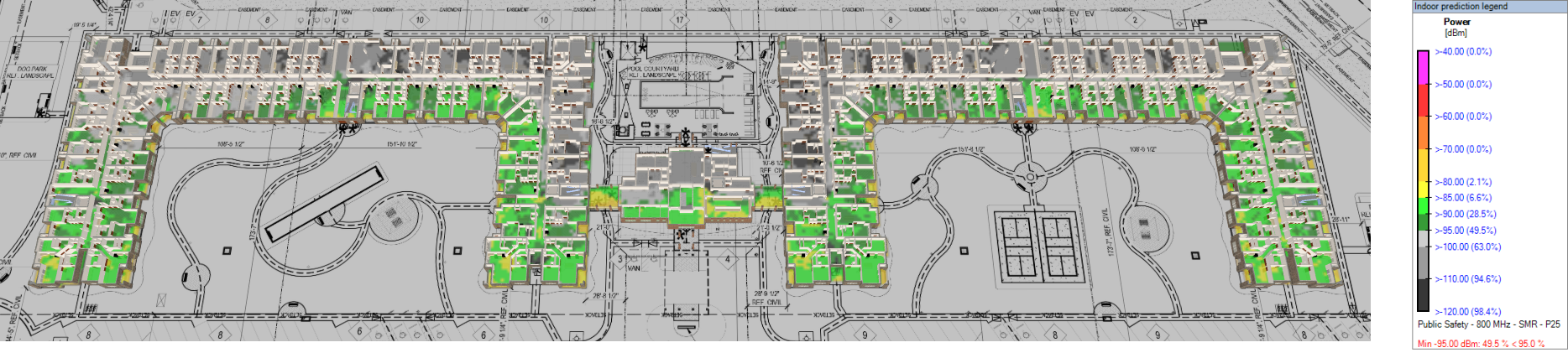
- Build an iBwave model to understand layout, riser locations, and equipment spaces
- Identification of applicable requirements — carrier specifications for cellular, AHJ and IFC 510 requirements for Public Safety
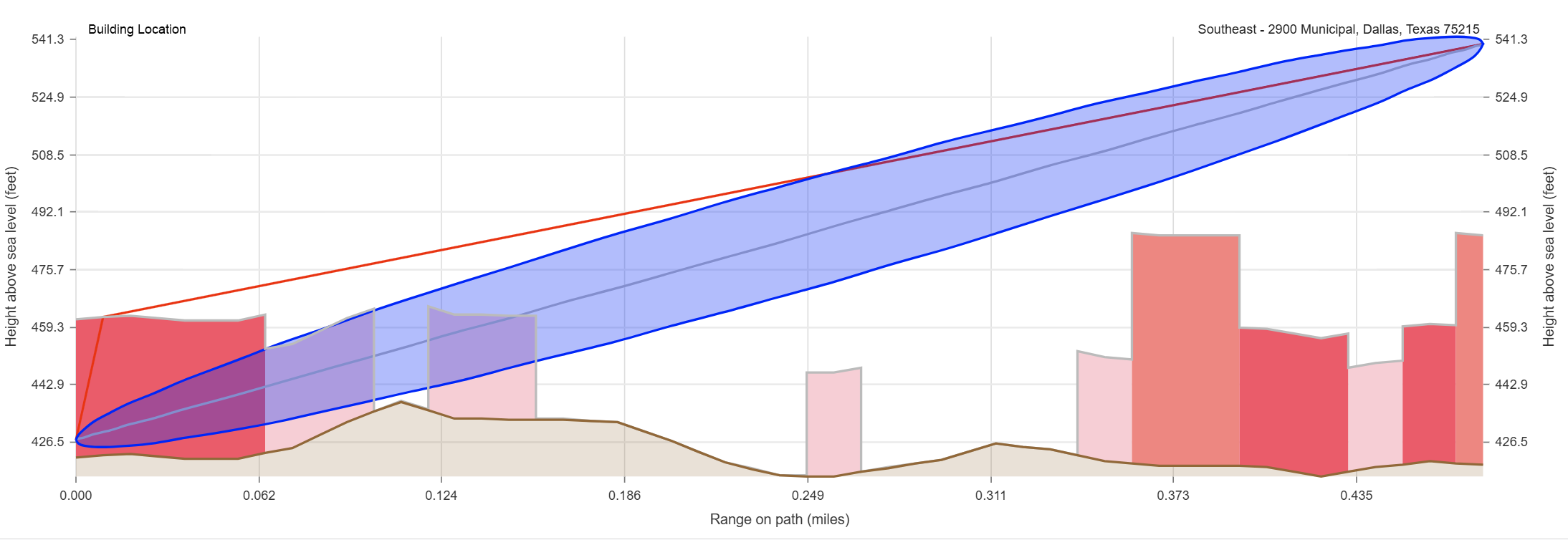
- For Public Safety systems estimate the expected path loss between the jurisdiction's radio towers and the ERCES roof mounted donor antenna and at the perimeter of the building. Public Safety systems may require that an iBwave model be built. Cellular systems may require a site visit for radio frequency data collection.
- Definition of coverage objectives: which areas, which systems, to what standard


What we deliver
Coverage requirements summary, organized by system and floor.
Where the donor antenna should be placed, based on the iBwave model and the path loss calculations to the selected jurisdiction's radio tower.
Preliminary feasibility assessment and budget-planning input
Why it matters
Every decision downstream — antenna counts, equipment selection, testing plans — traces back to what we learn here. Getting the requirements right at this stage prevents redesigns, change orders, and failed sign-offs later.
Talk through your project
Tell us about your building and coverage requirements — we'll help you determine what's needed and walk you through exactly how we'd approach it.